
Wolves DAO Files #25: The Future of Web3 Casual Games
A deepdive into the casual game genre and possible Web3 integrations


Mobile Casual Games
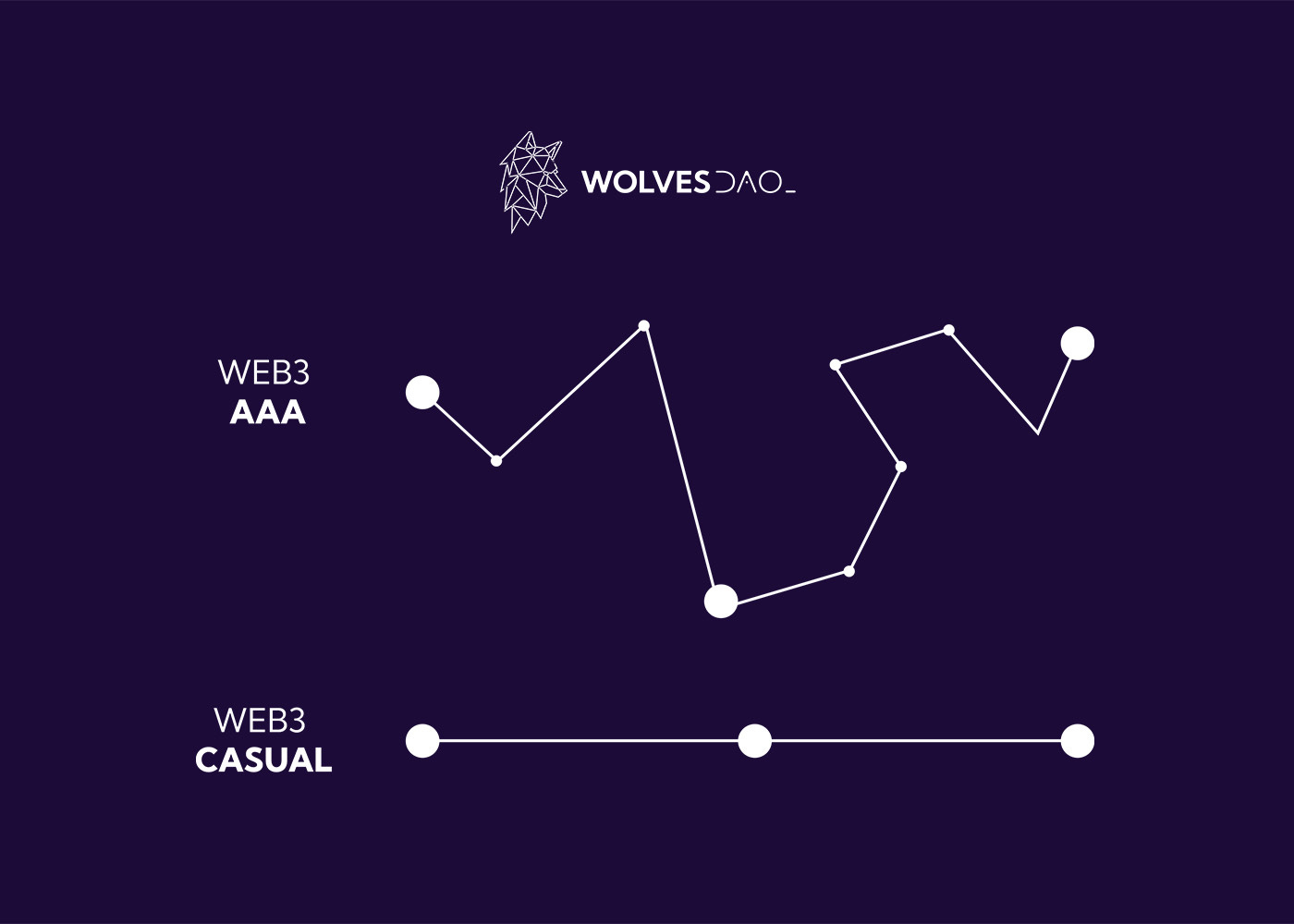
Web3 studios striving to create the next 'AAA' or 'AA' title are gearing up for a monumental challenge. Why? They often lack the resources in terms of manpower, talent, reputation, and budget to compete head-to-head with established Web2 studios. Additionally, these ambitious projects typically require years of development and still carry a substantial risk of never achieving product-market fit (PMF).
So, where do the more promising opportunities in Web3 gaming reside? They appear to be concentrated in mobile gaming, particularly within the casual gaming genre.
They’ve got a bright future with $25B in revenue forecasted by 2027.
This market segment offers distinct advantages such as user-friendly onboarding, broad mass appeal, and shorter development cycles. Seemingly a way for Web3 to get closer to mass adoption. An approach that appears to offer Web3 a viable path toward achieving mass adoption.
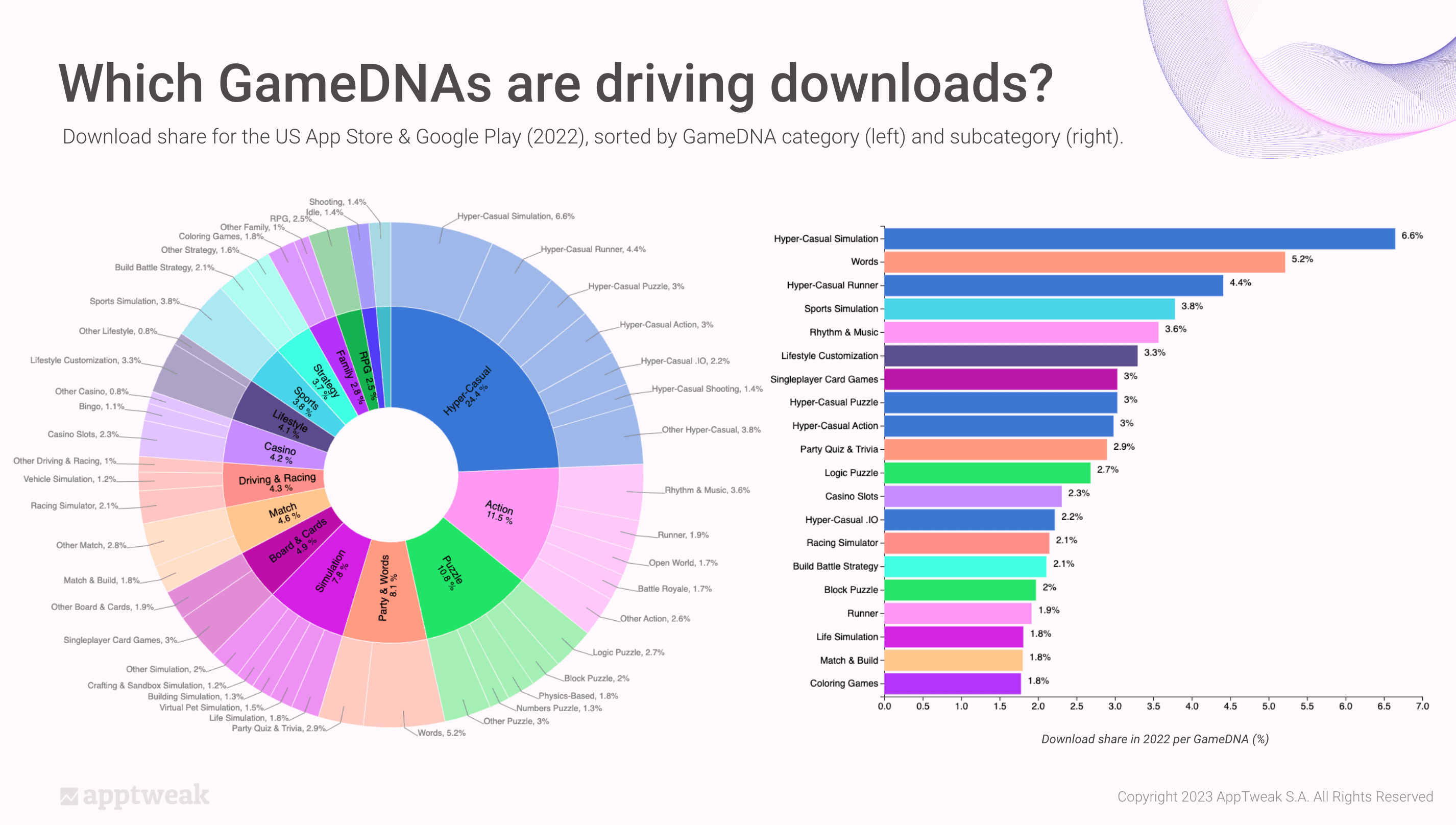
Consequently, the Wolves were presented with a question last week: Why is the casual genre well-suited for Web3 and how do we anticipate Web3 integrating into this genre?
Hyper-Casual, Casual, and Hybrid-Casual
Several models have evolved in the casual gaming genre: hyper-casual, ‘traditional’ casual, and hybrid-casual. Each of these models features distinct game mechanics, monetization strategies, and development approaches.
Hyper-Casual
Games within this genre are characterized by short, addictive, and highly repetitive gameplay loops. Players engage in a limited set of actions typically using simple swipe or tap mechanics. These games primarily emphasize short-term objectives, offering minimal content for players to consume.
Hyper-casual titles, due to their shallow gameplay depth, employ a different business model than casual games. This model centers on short development cycles, achieving a high volume of downloads, and generating revenue primarily through advertisements.
Hyper-Casual is not really a genre but more of a business model that includes a swift development process and aggressive ad monetization that creates the entire player LTV during the first few days only.
The lack of depth in these games makes it challenging to effectively introduce in-app purchases (IAPs) since players often do not remain engaged long enough to convert.
Casual
Games in the “traditional" casual genre exhibit distinct characteristics. These games utilize core mechanics such as match-3, Endless Runner, trivia, hidden objects, and adventure, among others. Additionally, they often incorporate a metagame, which encompasses elements beyond the core gameplay, such as events or minigames, managed through live ops.


In terms of gameplay complexity, casual games fall somewhere between hyper-casual games, which are relatively simple, and midcore games, which offer deeper gameplay experiences. Despite not being as complex as midcore games, casual games can still maintain high engagement and player retention, with some players investing substantial amounts of money into these titles.
If you look at the metrics of high-performing casual games, it's really nothing to sneeze at.
Quite a few have strong long-term retention and player ltvs of $10+ in the US.
As these games have the longevity they can also monetize via cosmetics, upgrades, and other in-game items. The casual monetization model mainly revolves around attracting a high daily active user base (DAU) and a medium push of IAPs.
Many casual games also make the player collect items, in the form of stickers, animals, furniture, etc. These collectibles are sometimes permanent, but can also be removed from the player’s inventory after every season. The player's relationship with the core gameplay is often one-directional, where these items can merely be collected and don’t have any further use.
Hybrid-Casual
Hybrid-casual games represent a category that combines casual gameplay mechanics with elements borrowed from other successful game genres. These additional elements are carefully selected to enhance long-term player engagement, social interactions, and monetization opportunities. In essence, they blend the simplicity of casual gameplay with RPG-like progression features.


A great example of a hybrid casual game is Archero, where there is a very simple (and addictive) core loop of running in dungeons and killing everything. However, players are soon introduced to RPG elements such as leveling, skill trees, and crafting.
The metagame within hybrid-casuals typically offers greater depth, providing players with long-term goals to pursue. This sense of achievement serves as a powerful incentive for players to return to the game regularly.
The distinguishing features that define this hybrid genre are geared towards improving player retention and facilitating in-app purchases (IAPs), with or without ads. To highlight the significant monetization differences from the traditional casual genre, consider an example provided by Naavik.
The IAP revenue comparison with arguably the biggest hybridcasual game of today — Survivor.io — looks very different. For example, Subway Surfers has seen 250M downloads and $9.8M in net IAP revenue over the last 12 months. In comparison, Survivor.io has seen 62M downloads and $276M in net IAP revenue over the same time period.
~Naavik.Co | The Evolution of Hybridcasual
Application of Blockchain
In the upcoming section, we will explore the integration of blockchain technology into these game genres:
The advantages of incorporating blockchain technology across all these genres.
Tailored approaches for implementing blockchain integration within each specific genre.
General Applications
Improved UA and Retention, and Reduced CAC
To begin, blockchain integration offers the potential to enhance critical aspects of game development: user acquisition and player retention.
For example, I'm working on a report looking at a project that claims to have increased player retention by 2-3x just by adding nano-rewards and is now working with ~600 games.
As highlighted in the example above, the concept of 'nano-rewards' (rewards in cents) has been effective in extending user engagement within games. Likewise, nano-rewards can be leveraged to entice and motivate new users to join games, thus lowering advertising expenses and bolstering user acquisition (UA) while reducing customer acquisition costs (CAC).
For a more in-depth exploration of how Web3-related rewards can enhance UA, please refer to a previous article: "The Wolves DAO Files #22: Are On-chain (Gaming) Reputation Systems the Future of UA?"
New Monetization Models
The incorporation of Web3 technology to implement 'nano-rewards' opens up new avenues for innovative monetization strategies, liberating game studios from the confines of conventional app store pricing models.
Nanopurchases, which are very low-value in-app purchases, could be a viable monetization model for Hyper Casual games in addition to ads (and especially in areas where eCPMs (effective cost per 1000 impressions) are close to 0).
User willingness to make payments isn't a simple yes-or-no proposition; it hinges on the specific price points that each user finds acceptable. 'Nano-rewards' introduces the possibility of catering to a broader range of buyer personas by offering options that align with varying price thresholds.
UGC Infrastructure (Casual and Hybrid)
Blockchain technology can play a role in user-generated content (UGC) by substituting certain payment and procedural mechanisms with automated smart contracts. This not only streamlines the process but also ensures that creators receive direct and transparent compensation for their contributions.
Sufficient resources to do UGC features because blockchain replaces some of the requirements for our own infra (meaning indie studios can do UGC too).
Cross Game Crafting (Casual and Hybrid)
Ecosystem-focused studios like Parallel can enable crafting NFT items with cross-game utility via Web3 integrations. Cross-game crafting can spark interest in less-explored games, offer entry points for Web3 newcomers, and boost economic activity.
For example, players can craft items in Mir 4 to be used in another game, such as items and gear for a Splatoon-like MOBA
Applications in Hyper-Casual
When delving into Web3 integrations for hyper-casual games, it's crucial to take into account the genre's characteristics. Firstly, hype-casual games may not seamlessly fit with in-game NFTs. These typically necessitate a level of player attachment to the assets, which is often challenging in hyper-casual games due to their limited depth, preventing players from forming strong emotional bonds with the game content.
However, an ecosystem-wide approach, known as Studio NFTs, presents potential. Examples include:
Arc8: A hyper-casual games platform offering NFT passes for competitions with various tokens and NFT prizes.
The Grapes: A (hyper-) casual game developer with an NFT collection, "Grapes," where holders earn a percentage of revenue through token distribution.
Sugartown: Zynga's Web3 casual games platform, where NFT collection holders can stake their "Oras" to play and compete for leaderboard (NFT) rewards.
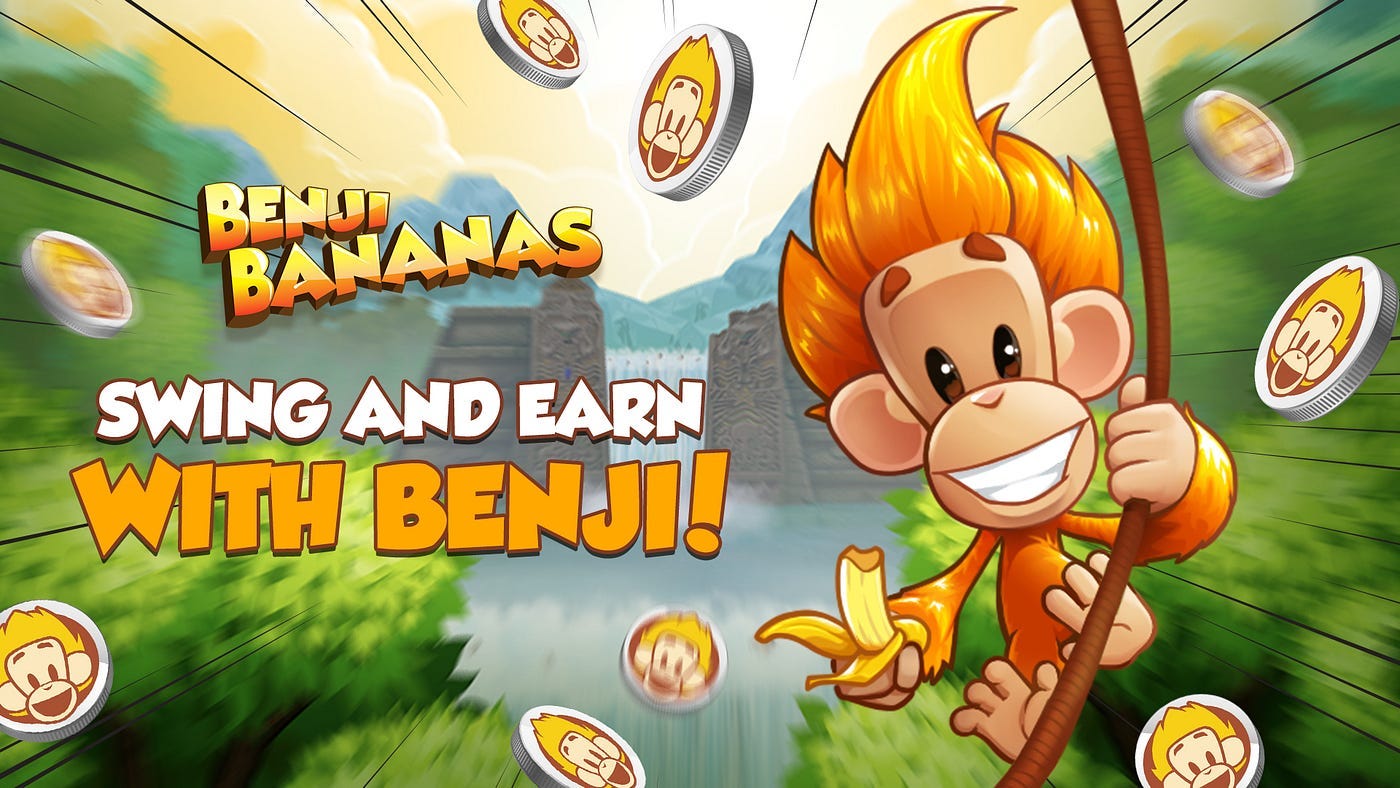
Benji Bananas: A hyper-casual game selling Membership Passes, granting holders an ecosystem token when they play.
Other examples include Playzap, Playbite, PlayEmber, and Joyride Games.
Additionally, considering the concept of crypto nano-rewards could also be relevant in this genre. Rewarding players for playing hyper-casual games isn't something new either, traditional platforms already exist that pay out players in the currency for claiming gift cards.
Note: In the case of ecosystems, it's important to acknowledge that live ops and leaderboard rewards contribute to making the overall ecosystem more hybrid casual, blending casual and hybrid elements.
Applications in Casual
The use of in-game NFT applications in casual games has some potential, although it remains somewhat limited. This limitation is primarily because players in the casual genre tend to have a one-directional relationship with collectibles.
A web3 example of shallow collectible integration might be Slotomania.
You collected pieces of slot machines, put together sets, and then got some delayed off-chain rewards.
If casual games were to employ P2P trading and other features that drive collectability and ownership it would be more sensible to use more complex mechanics and more hardcore game-style aesthetics. Essentially creating a midcore title.
Similar to the hyper-casual genre, the approach of Studio NFTs does have more potential in this genre. For example, a pass that could distribute rewards across a variety of games under the same publisher.
Lastly, there’s the application of (high) stakes gameplay, as already seen in the F2P genre with games such as 8Ball Pool and Anipang Match.
Anipang Match (match3) has also tried this with their PVP mode: token entry fees and token rewards.
Skill-based stake games could serve as enticing financial meta-loops for players to partake in. These types of game modes serve the competitive player type and additionally fit the Web3 persona. Additionally, competitive modes drive spending and can lead to different monetization models for casual games to emerge. Eyeball Pool, the Web3 successor of 8Ball Pool, will be released in the upcoming months and serve as an insightful case study to see skill-based stake games develop in the casual genre.
Applications in Hybrid-Casual
What the hybrid-casual genre makes the most fitting for direct in-game NFT integrations is its ability to introduce players to long-term goals and create a sense of achievement that drives the want for ownership. Among hyper-, hybrid-, and casual, the hybrid-casual genre also has the strongest IAP monetization.
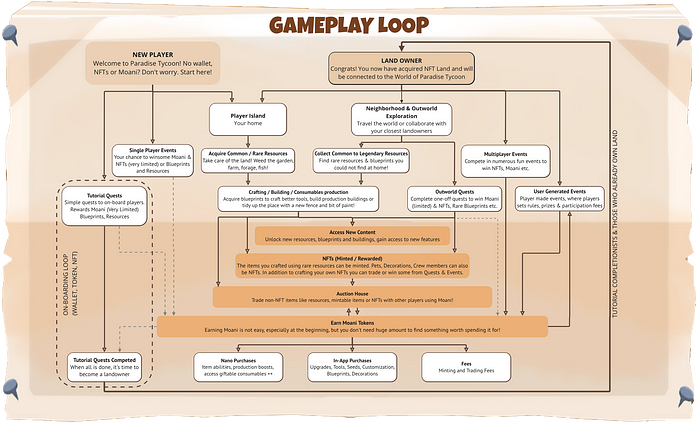
Above is an example of Paradise Tycoon’s gameplay loop, existing of various meta loops, providing an overview of how the gameplay feeds into each other. More complex game systems create opportunities for trading and new (social) dynamics to arise between players, driving the need for social expression and the creation of different P2P economies. Which both drive demand for NFTs.
Conclusion
While 'AAA' titles pose formidable challenges for Web3 studios due to resource constraints and extended development timelines, the casual gaming genre offers a compelling alternative. This genre encompasses hyper-casual, traditional casual, and hybrid-casual games, each with unique mechanics and monetization strategies.
The article discusses how these genres currently employ Web3 integration and how they could be applied to future games. Here’s an overview of the potential applications across this genre:
All genres:
Improved UA and retention, and reduced CAC
New monetization models
Casual and hybrid-casual:
UGC infrastructure
Cross-game crafting
Hyper-casual:
Studio NFTs
Nano-rewards
Casual:
Studio NFTs
Stakes gameplay
Hybrid-casual:
In-game NFTs
Special Thanks to
Samusb, Matt, Zapdan, Dalteco, Apix, Ak29, Farmer Nash, Henryclay, TimoYouth, Tictacs, Tongo, Lemz, Pygo, Arto, and Cavalorn for actively contributing to the discussion and providing valuable insights.
Need Help?
Need market intel and advice to help your Web3 project succeed? Get in touch with The Wolves today and receive a free consultation!
Disclaimer
None of this is financial or legal advice.
 | A guest post by
|